

Here are our most recent blog posts.

Making Organisations Future Fit – Managing the Change Curve
Why do some organisational changes take hold while others leave people uncertain or resistant?
In 2021, COVID-19 made that question urgent. Drawing on Greg Young’s Leadership Comes Alive conversation, this article explores the human side of transformation and three practical ways leaders can make change clearer, hear concerns and help their teams move forward.
The Leader’s Narrative
Written by George Perry, May 2021
As a leader do you use storytelling as a tool to help enable your organisations to be healthy, happy, successful, inclusive, agile, and sustainable?
Using stories as a tool is clever, as stories entice engagement. Any engaged listener is more likely to take on board what you’re trying to put across to them. Storytelling enhances engagement because it changes the way we perceive information.
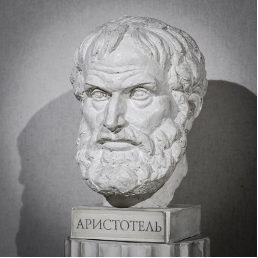
Our recent blog looks at not only the benefits of storytelling for leaders, but also the history of this, dating back to the ancient Greeks.

Mindfulness Matters
Written by George Perry, April 2021
What is mindfulness – what does it really mean?
In the past 5-6 years the notion of mindfulness has been hard to avoid (unless you’ve been living in a barn), so much to the point where some critics have cynically labelled our mass market version of it as ‘McMindfulness’.

The Power of TWO
Written by George Perry, March 2021
In a recent biopic I watched about the lives and career of the legendary comedy duo Laurel and Hardy, I was pretty taken aback by what I saw. I hadn’t read the synopsis and had no idea what to expect, but since I’d always had an admiration for the legendary pair, I thought I would invest into watching it. At first, I thought it was going to be a docudrama based on reasons why Laurel and Hardy were so successful, yet as the events in the film unfolded, I was astounded to realise that the movie was portraying ways how they were unsuccessful.

How to be Authentically Authentic!
Written by Danielle Grant, March 2021
We hear a great deal about the need to be authentic as a leader today. But what exactly does that look like? For some women, particularly Boomers and Generation X, growing up as leaders they became convinced that to crack the glass ceiling, they had to behave like the male leaders around them…not very authentic!

Who Lies Behind the Scenes? – Exploring the Benefits of Neurodiversity (Part 2)
Written by George Perry, January 2021
Last time in my blog I featured a list of 8 people from history that have made an incomparable contribution to society yet they are now considered to be on the autistic scale (or have a proven diagnosis, of Asperger’s syndrome, for example). Admittedly, in this list I only focus on people that are said to be on the autistic scale, whilst I recognise that neurodiversity is far wider reaching than only this condition. However, merely searching within these parameters alone has dug up all sorts of curious points.

Who Lies Behind the Scenes? – Exploring the Benefits of Neurodiversity (Part 1)
Written by George Perry, January 2021
We’ve often heard the caricature that people who are good at maths are probably autistic. This may or may not be true, but otherwise, is being autistic in anyway a bad thing for society?
This delves quite deeply into both fields of psychology and sociology, that as an evolutionary principle, none of us want to stand out too much as it is a pack mentality for survival, and this is what has enabled us to come so far. Yet, is it?

Lessons Learned from Leadership in Nature – And How to Adapt Them in a Post-COVID World
Written by George Perry, January 2021
Following up from our previous post about how to succeed as a leader of a complex adaptive system, we released part 2 in our series of podcasts on the topic of the impact the pandemic has had on leadership, and how this has highlighted the need for us to adapt as leaders. This is particularly highlighted as we move into 2021 and reach towards our post-COVID recovery.

Written by George Perry, January 2021
The origin and concept of the ‘butterfly effect’ is attributed to the American science fiction writer Ray Bradbury, when he published ‘A Sound of Thunder’ in the early 1950s – that time being pretty much the heyday of pulp fiction, man was yet to set foot on the moon, the cold war was heating up, and television was only starting to dominate leisure time in people’s living rooms.

Politics Beyond Self: For a Better Society and World
Written by Duncan Enright, Oct 2020
In October 2020 I have been thinking about the forthcoming US Presidential Elections and other political events, as well as the challenges we face. These offer us all around the world an opportunity to discuss the desirable attributes of political leaders who build high performing countries. You can hear more in the Leadership Comes Alive podcast.
Read the full article here.

Politics Beyond the Individual
Written by Duncan Enright, Oct 2020
No successful government can carry on without a sense of direction. The complex machinery of government requires political leaders not only to have a vision, but to be skilled in leading with a visionary style. That means not only having an inspiring vision, but leading people towards a shared vision that everyone (or at least a working majority) has bought into and owns. A visionary style can be highly positive, and can offer clear direction. It requires self-confidence (and self-awareness), transparency and strong relationship management.

Politics Beyond the Faction: Choosing the next President in the United States
Written by Duncan Enright, Oct 2020
Ensuring the quality of those we choose to run our government was a prime consideration for the Founding Fathers of the United States. In The Federalist Papers (No. 10) James Madison wrote that government should be delegated to a body of chosen citizens “whose wisdom may best discern the true interest of their country and whose patriotism and love of justice will be least likely to sacrifice it to temporary or partial considerations”.